
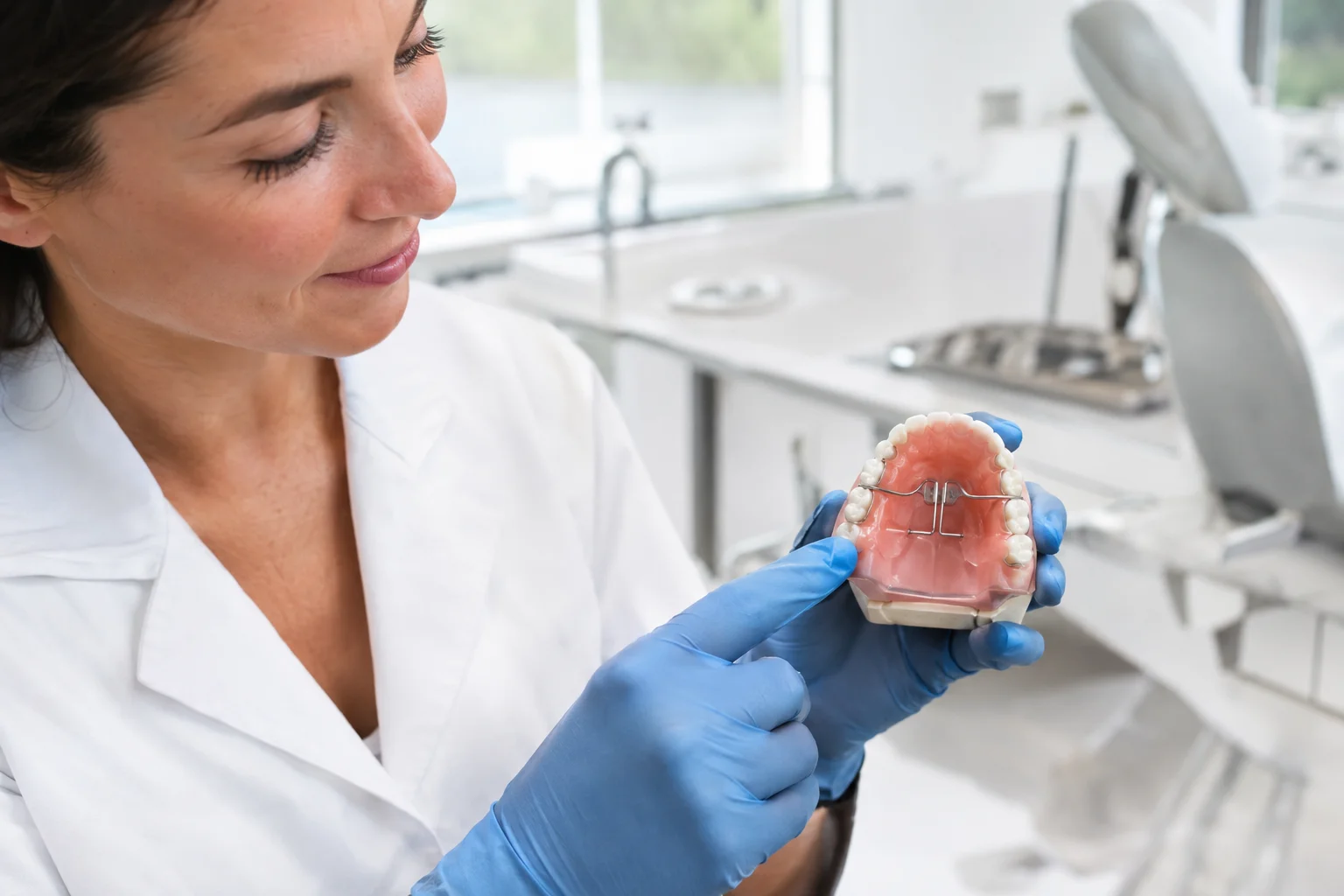
Habits like thumb sucking, finger sucking and tongue thrusting are common in young children, but when they continue as the permanent teeth come in, they can push teeth and the jaw out of position. A habit appliance is a small, custom orthodontic device that gently helps a child break the habit and gives the teeth and jaw a chance to develop normally.
Habits That Can Affect the Bite
- Thumb or finger sucking
- Tongue thrusting when swallowing or speaking
- Prolonged pacifier use
- Lip sucking or lip biting
- Mouth breathing
Signs a Habit May Be Affecting Teeth
- Upper front teeth flaring forward
- An open bite, where the front teeth do not meet when biting down
- A narrow upper jaw or crossbite
- Changes in speech, such as a lisp
How Habit Appliances Work
Most habit appliances are fixed to the back teeth and sit quietly behind the front teeth. They act as a gentle reminder: they make the habit less satisfying or guide the tongue to rest in the right place. They do not cause pain, and most children adjust within a few days.
- Tongue crib or tongue rake: guides the tongue away from the front teeth and discourages thrusting
- Palatal crib: discourages thumb and finger sucking
- Tongue reminder or bead appliance: trains the tongue to rest in its proper position
When to Start
Early evaluation matters. The American Association of Orthodontists recommends that children have their first orthodontic check-up by age 7, when habits and their effect on growing teeth are easiest to spot and correct.
If you have noticed a lingering habit or changes in your child's bite, schedule a consultation and our team will let you know whether a habit appliance could help.